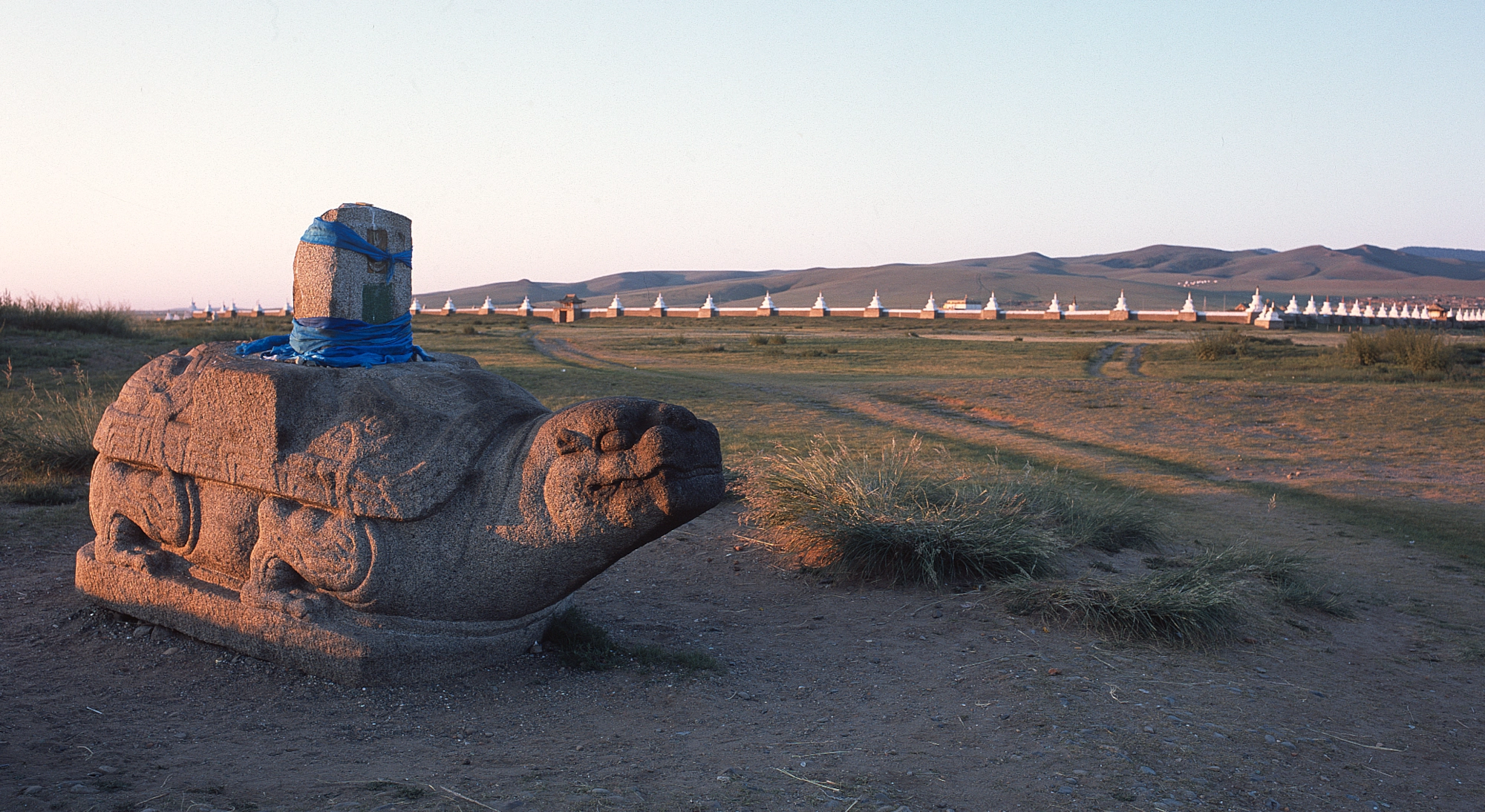
The tortoise and the inscription stele of Karakorum
An ancient stone tortoise stands in the square in front of the Great Hall. To this day, it is adorned with colourful prayer scarves and sprinkled with airag in the hope of receiving blessings.
Significance and function of the tortoise
Life-size granite tortoises can be found in various locations in Mongolia, for example at the ancient Turkic burial site of Khöshöö Tsaidam. This motif may have originated in China, where stone tortoises are a common feature of high-ranking tombs. The tortoise as a symbol of eternity and the creation of the world is a widespread motif throughout much of Asia, including Tibet and India. However, there is no direct evidence of such beliefs among ancient nomads. These ideas may have been common knowledge or could have been influenced by contact with China. In Buddhism, the tortoise is associated with patience, wisdom, longevity and endurance. It features particularly prominently in teachings on mindfulness, the rarity of human rebirth, and the cultivation of inner peace. Tortioses are also revered in Buddhism as protectors and guardians, and for their patience and wisdom. In Mongolia, they are considered sacred.
The inscription from 1346
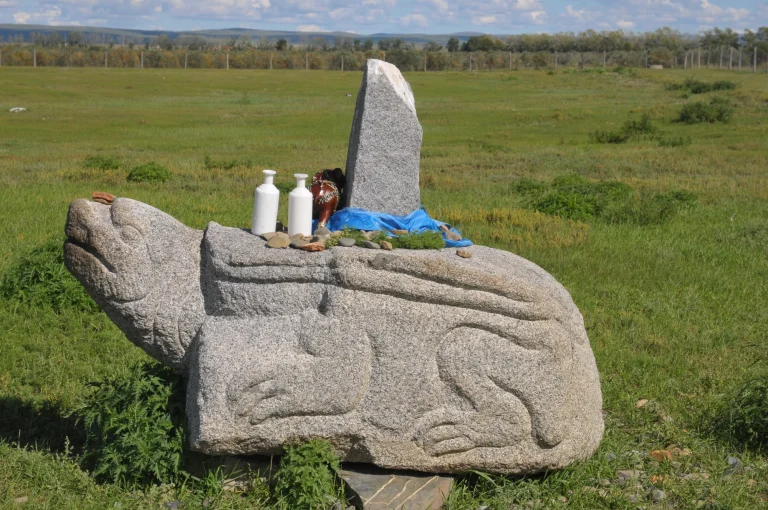
The shells of the granite tortoises in Mongolia have square recesses for placing inscription steles. However, most of the ancient steles have either not survived or have been found in fragments at their respective sites. The same is true of the stele of the Karakorum tortoise. It still stands in front of the remains of the Buddhist ‘Pavilion of the Rise of the Yuan’ temple in the south-western corner of the city. Since the 19th century, researchers have found fragments of inscription steles in various locations on the city grounds and on the grounds of the Erdene Zuu monastery. Some of these fragments have been incorporated into the walls.
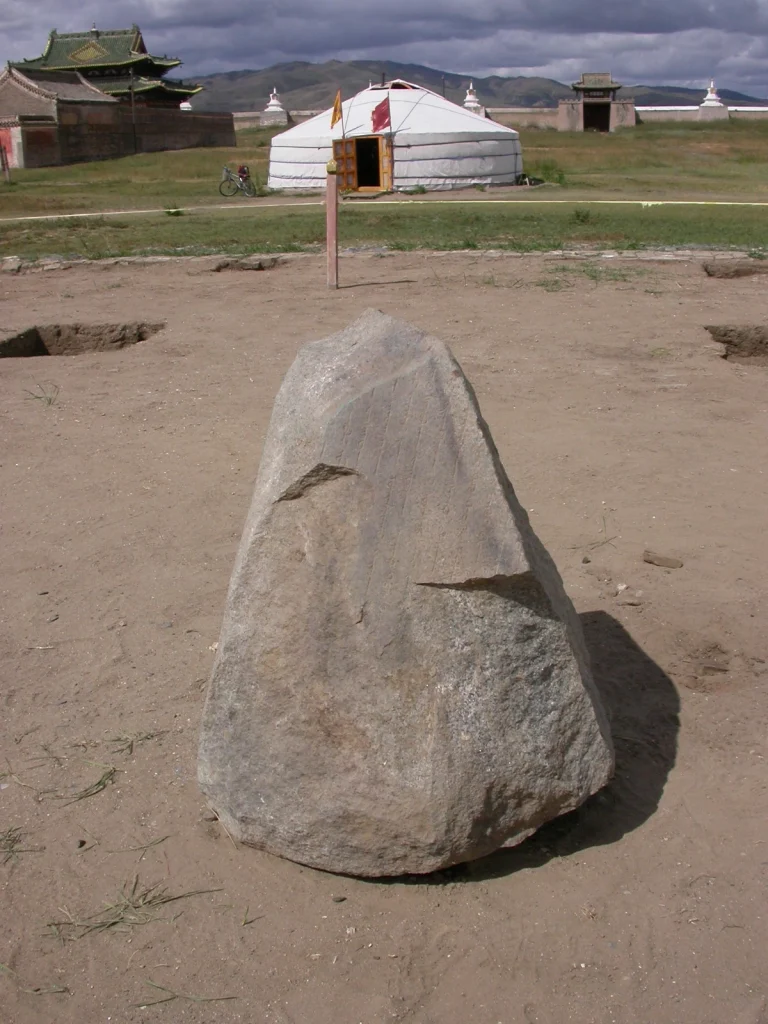
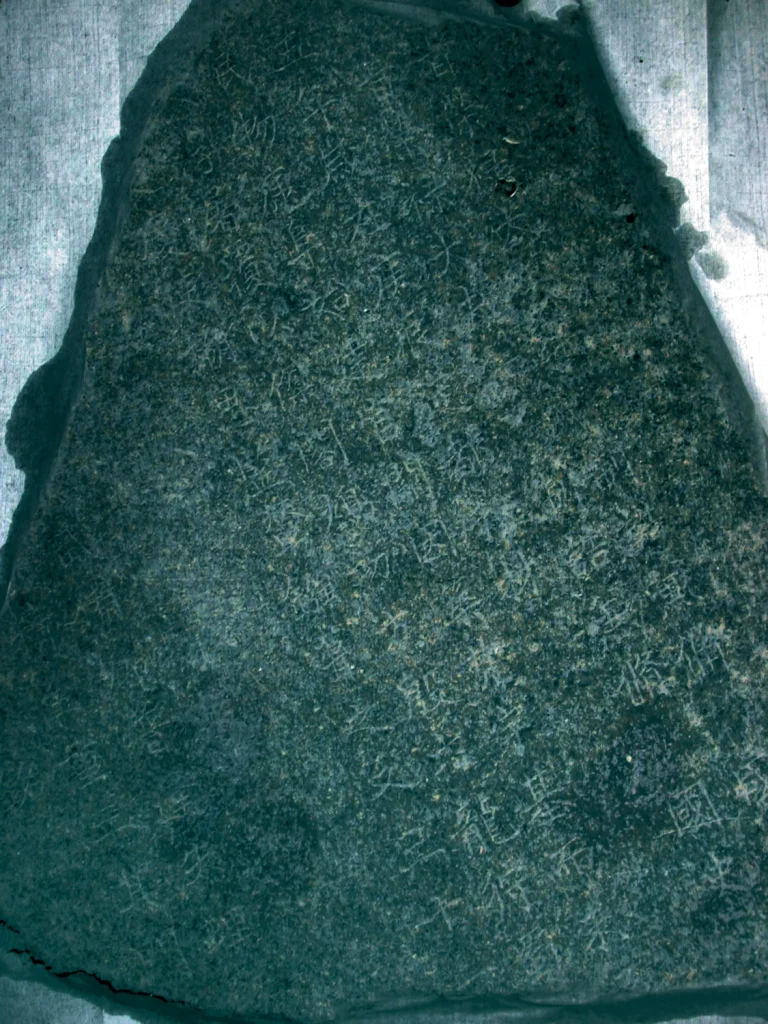
The inscription on the stele is written in both Mongolian and Chinese and has been studied and translated by various linguists over the decades. According to these studies, it recounts the founding of Karakorum by Genghis Khan and the construction of the ‘Pavilion of the Rise of the Yuan’ temple — the so-called ‘Great Hall’ — under Möngke Khan. It also describes the temple’s later renovation, for which the inscription was donated in 1346.
Even today, the Karakorum tortoise is adorned with prayer scarves, offered airag and sprinkled with water in the hope of receiving blessings. In order to ensure that future generations also have this opportunity, the tortoise has now been fenced off to control the large numbers of people who visit it, as excessive crowds would accelerate its decay. This stone tortoise has stood in its place for almost 680 years, witnessing the rise and fall, oblivion and rediscovery of Karakorum, and hopefully it will also witness its future.